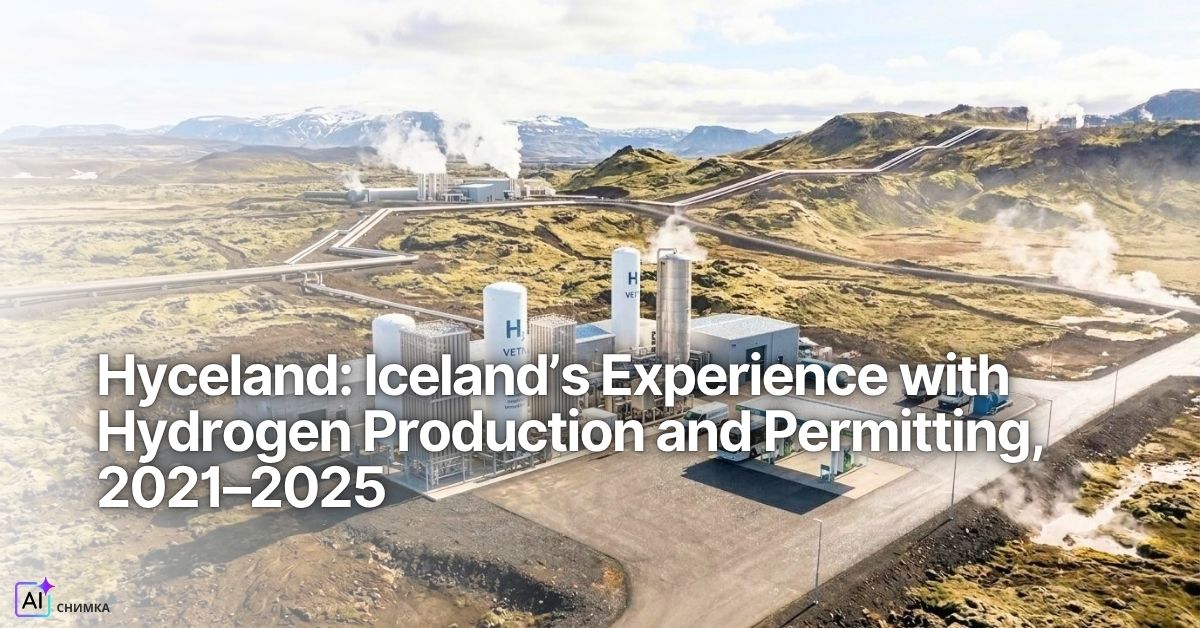
Hydrogen Council: Global Hydrogen Investments on the Rise
Global investments in hydrogen projects have exceeded USD 110 billion — an increase of USD 35 billion compared to last year. These figures come from the annual Global Hydrogen Compass report prepared by the Hydrogen Council.
The report identifies 510 projects worldwide that have reached a final investment decision, are currently under construction, or are already operational.
Since 2020, more than 1,700 projects have been announced — a 7.5-fold increase.
Learn more here.
Pilot Project in the Netherlands Demonstrates Safe Underground Hydrogen Storage Using Oilfield Technologies
International energy company Halliburton has published an analysis of a multi-year pilot project in the Netherlands, showing that existing oil and gas well drilling and completion technologies can be successfully applied to underground hydrogen storage.
The tests were carried out in a 1,290-meter gas well and a small underground salt cavern. The program included integrity testing with nitrogen and hydrogen, followed by a long-term operational phase. Results showed that standard components used in the oil and gas industry perform reliably even in pure hydrogen environments.
During the 11-month test, conducted at pressures of up to 200 bar and a temperature of 42°C, a safety valve was triggered more than 75 times without any signs of leakage. No evidence of hydrogen embrittlement or degradation was found in various metal alloys, welds, or non-metallic materials.
The project concluded that proven technologies from the oil sector are applicable in the early stages of building underground hydrogen storage infrastructure. At the same time, experts emphasized the need for further research into long-term material durability and the impact of dynamic loads before large-scale deployment in European energy systems.
Source: H2 View
Hydrogen as the Future of Defense Technologies
Lechmar pic
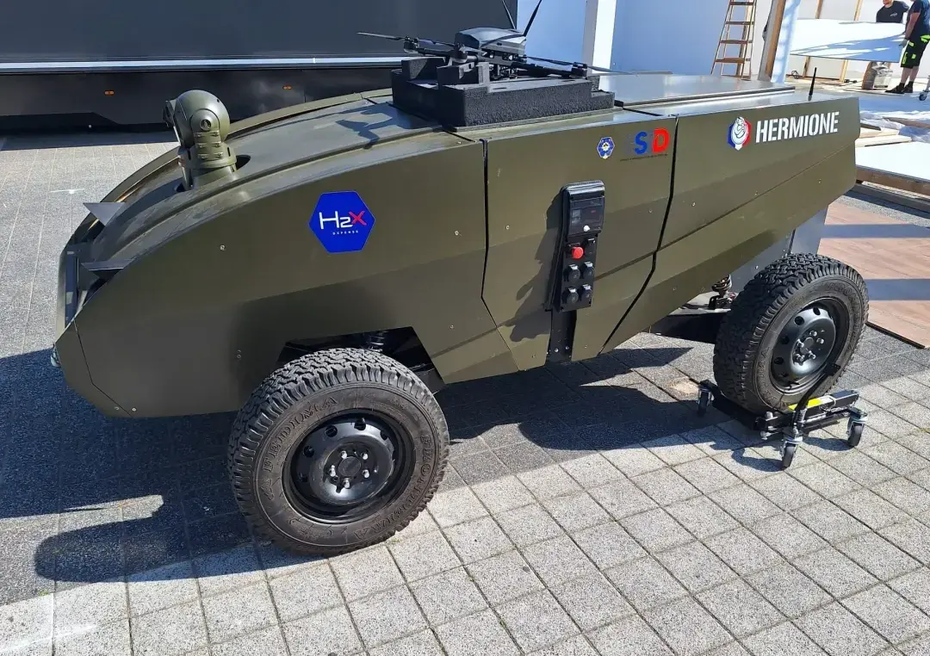
At this year’s International Defence Industry Exhibition (MSPO) in Kielce, Polish company P.H.U. Lechmar and French H2X-Defense unveiled their jointly developed next-generation unmanned ground vehicle (UGV), named Hermione.
The platform uses a hydrogen propulsion system and was designed as a technology demonstrator to meet the growing logistical and operational demands of modern armed forces. In addition to reducing battlefield emissions, it provides extended operational time and a flexible modular architecture that can be configured for different tasks — from drone transport and reconnaissance to armed support.
At the presentation, Hermione was showcased in a configuration designed for transporting unmanned aerial vehicles, with a payload capacity of 300 kg and options for alternative versions with capacities of up to two tons. Powered by hydrogen fuel cells and a 25 kWh battery, the system can operate for up to 20 hours. Refueling takes only three minutes or can be achieved in the field through cylinder replacement.
Alongside the platform, H2X-Defense demonstrated the mobile hydrogen generator G-15/050, designed to provide additional power for unmanned systems. This solution highlights a strategic focus on low-emission technologies and opens new opportunities for integrating sustainable energy sources into military operations.
Source: FuelCellsWorks