Extreme H Kicks Off the Era of Hydrogen Motorsport in Saudi Arabia
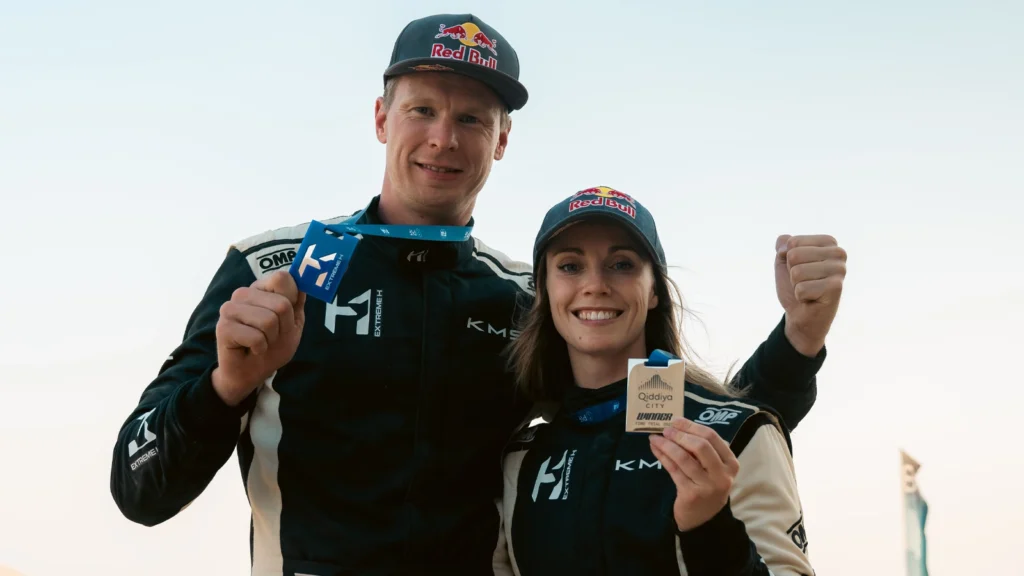
Extreme H day one winner team KMS hold their medals. (Image: Extreme H)
The world’s first-ever hydrogen-powered car race — the FIA Extreme H World Cup — took place in the desert near Qiddiya, Saudi Arabia. This landmark event marks a new chapter in sustainable motorsport, replacing the electric Extreme E series with vehicles powered by hydrogen produced via renewable-energy-based electrolysis.
The championship showcases how clean energy can fuel high-performance off-road vehicles without emitting harmful substances. The Pioneer 25 model features a 400 kW fuel cell and 700-bar hydrogen tanks — a system that produces only water vapor as a byproduct.
German driver Timo Scheider, a two-time DTM champion, described his participation as “a step into the future of motorsport,” emphasizing hydrogen’s role in the transition to cleaner mobility. Series founder Alejandro Agag confirmed that Extreme H will be held annually and is set to expand its calendar.
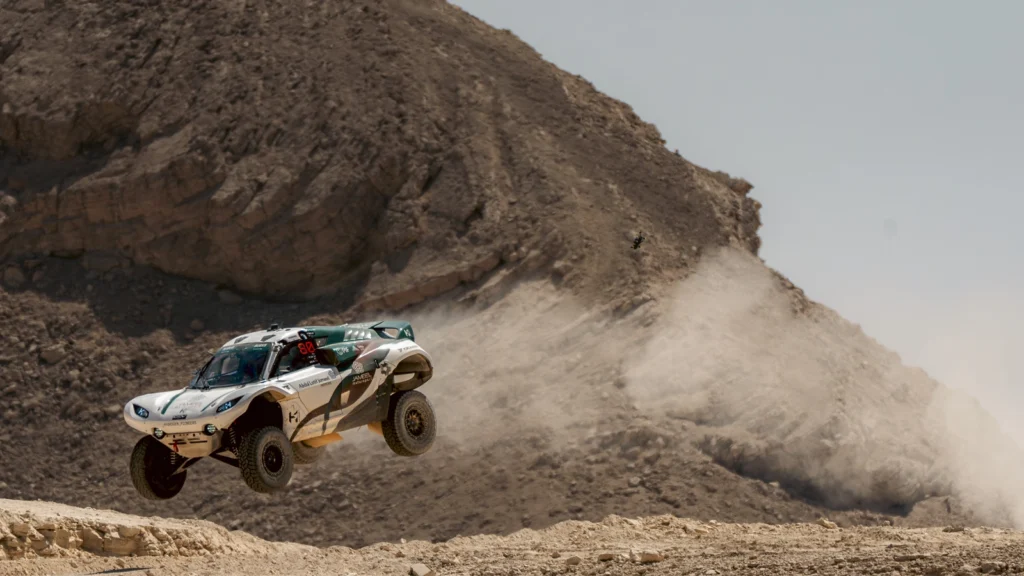
Jameel Motorsport’s Pioneer 25 hydrogen race car. (Image: Extreme H)
The inaugural race was won by Team KMS, who beat Jameel Motorsport by just 0.6 seconds. The narrow margins between teams proved that hydrogen technology can deliver power and dynamics on par with traditional fuels — and make sustainability a core part of competitive racing.
European Commission to Update Hydrogen Strategy by End of 2026
The European Commission plans to revise its hydrogen strategy and present an updated version by the end of next year, according to a senior EU official speaking at the World Hydrogen Week. The revision is expected to include changes to the rules governing the production of renewable fuels of non-biological origin (RFNBOs) as part of the 2026 strategy review.
The recently concluded European Hydrogen Week 2025 brought together over 1,200 participants from institutions, industry, and academia. The consensus was clear: a modernized strategy is urgently needed — one that aligns with current challenges and supports sustainability and energy independence.
Key priorities for the revised strategy include stronger enforcement of existing regulations, faster development of hydrogen infrastructure for production, storage, and transport, and increased public funding through the creation of an industrial decarbonization bank and continued support for the Hydrogen Bank. Participants stressed the importance of stimulating lead markets for clean technologies and implementing mechanisms to protect early investors.
“The sector is united in the belief that the EU must act urgently to ensure that all efforts and investments yield results — and that pioneering projects won’t suffer from future policy shifts,” said Hydrogen Europe CEO Jorgo Chatzimarkakis. “Unlocking Europe’s hydrogen sector is key to the continent’s energy resilience and autonomy.”
Bosch Launches Its First Hydrogen Truck in Nuremberg
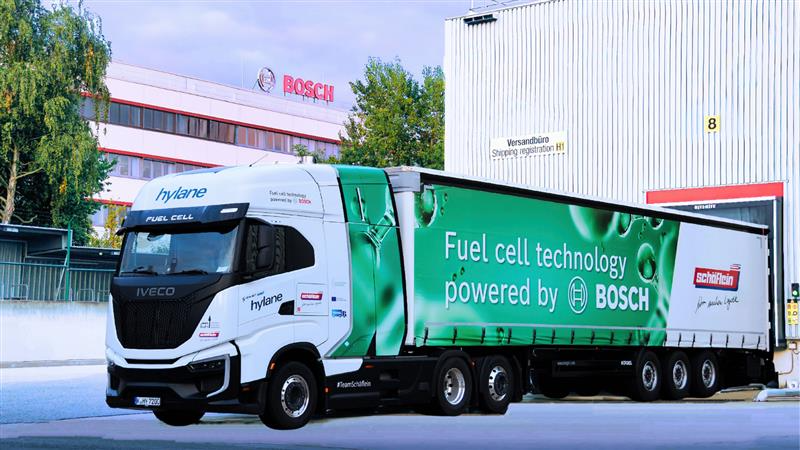
Bosch hydrogen fuel cell truck operating at Nuremberg plant, powered by Bosch FCPM and operated by Schäflein (Image: Bosch)
Bosch has begun operating its first hydrogen-powered fuel cell truck, which is now in regular use for daily transport between the company’s factories in the region. The 40-ton Iveco S-eWay is equipped with Bosch’s Fuel Cell Power Module (FCPM) and is expected to cover around 12,000 kilometers annually.
Beneath the cab lies the FCPM fuel cell, nominated for the German President’s Innovation Award. It delivers over 200 kW of power, supported by two batteries, bringing the total system output to 540 hp. Five 700-bar hydrogen tanks provide a range of up to 800 km, with refueling times comparable to diesel.
Bosch’s goal is to cut emissions and collect real-world data to refine the next-generation fuel cells — Compact 190 and Compact 300.
“The fact that the truck is operating flawlessly shows that the technology is ready for mass production,” said plant manager Alexander Weichsel.
The company supports Bavaria’s Hydrogen Strategy 2.0 and plans to expand its hydrogen infrastructure network across Germany.