Prof. Daria Vladikova and Ambassador Maria Pavlova highlight immediate opportunities for South African researchers, students, and industries to join Bulgaria’s pioneering hydrogen initiative.
Hydrogen Bridges: Why Bulgaria’s Clean Future Needs Global Partnerships
Following the years of the “H2 Hype”, hydrogen is slowly but surely becoming a European reality with supply and demand requiring a cross-border strategy. International collaboration on green hydrogen isn’t just for neighboring countries. As Bulgaria expands its partnerships across Europe, it’s also reaching out to new allies further afield—including South Africa.
In a joint interview with Mining Weekly, Professor Dr. Daria Vladikova, Scientific Committee Chair of the Bulgarian Hydrogen, Fuel Cell and Energy Storage Association (BGH2A), joined Ambassador Maria Pavlova, Bulgaria’s representative in South Africa, to extend a clear invitation: come build the hydrogen future with us. Their message was loud and clear: Bulgaria is not waiting around. It is ready right now to collaborate across continents on the development of green hydrogen technologies and is welcoming South Africans into the labs, classrooms, and boardrooms of Bulgaria’s developing hydrogen ecosystem.
Why This Matters for Both Bulgarians and South Africans
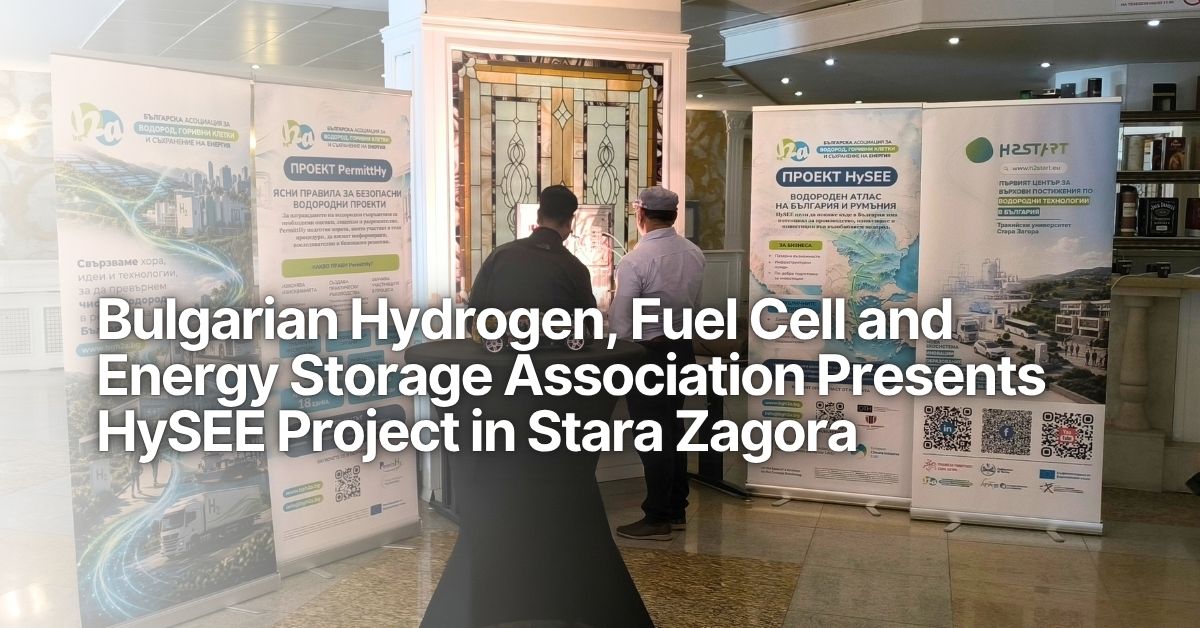
Because hydrogen could be our next big export. Because it means new jobs, cleaner air, smarter industries. And because this tiny molecule—when paired with sun, wind, and science—could power everything from trucks to factories. We’re not just talking theory. Bulgaria is building this reality brick by brick—with Stara Zagora as one of the hydrogen epicenters. The City is home to the H2START project, establishing a Centre of Excellence in Clean Hydrogen Technologies, and ZAHYR, the first Bulgarian hydrogen valley project. Prof. Vladikova emphasizes the immediacy of the opportunity:
“We are enthusiastic about establishing collaboration on hydrogen with stakeholders from South Africa and are fully prepared to initiate cooperation right away.”
while Ambassador Pavlova notes that:
Education and science have always been central pillars of the bilateral relations between Bulgaria and South Africa,” Ambassador Pavlova noted. A memorandum on scientific, technological, and innovation cooperation is expected to be signed this year.
South Africa has talent and a strategic interest in hydrogen. Bulgaria has growing expertise and is building cutting-edge research and innovation infrastructure, warmly welcoming students from South Africa for research secondments, PhD opportunities, and joint research activities.
And there’s something particularly exciting about this partnership: PEM electrolysis technology, chosen for Bulgaria’s ZAHYR Valley, relies on platinum group metals—minerals that South Africa produces in abundance. That’s a natural win-win.
Hydrogen Progress—and Profits
So, where is all this momentum headed? Bulgaria’s National Hydrogen Roadmap gives a clear picture:
- 60% of the hydrogen produced in Bulgaria is expected to power industry, transport, and energy right here at home.
- 40% is aimed for export—strengthening Bulgaria’s position in the EU’s Southeast Hydrogen Corridor and linking us into a broader cross-border network.
It’s a strategy that connects infrastructure, innovation, and international partnerships—and education is a central piece of that puzzle.
Building a Global Classroom for Hydrogen
The interview also underscored Trakia University’s active role in the European Hydrogen Academy—a pan-European initiative working to bring hydrogen education to life in 500 schools and 100 universities around the world. Though rooted in Europe, the project reaches beyond the continent. It is collaborating with both a school and a university in Namibia, helping to shape free, high-quality educational materials designed to support teachers across the entire network.
Ready to Get Involved?
To explore opportunities for collaboration, research, and exchange, get in touch with the Bulgarian Embassy in South Africa with the name of the institution and a contact person’s email.
To read the full interview, visit “Mining Weekly”.