Bulgarian Hydrogen Association Participates in European Hydrogen Week 2026 in Brussels
The future of European legislation on renewable hydrogen, emerging applications of hydrogen technologies in data centres, and the development of international partnerships were among the main topics of focus for the Bulgarian Hydrogen, Fuel Cell and Energy Storage Association (BGH2A) during European Hydrogen Week 2026.
The event is taking place from 26 to 30 October 2026 in Brussels under the theme “Scaling Hydrogen, Strengthening Resilience”. It brings together representatives of European institutions, national governments, industrial companies, research organisations and hydrogen associations.
BGH2A participated in thematic discussions and held meetings with European partners, representatives of other national hydrogen associations and organisations involved in joint projects.

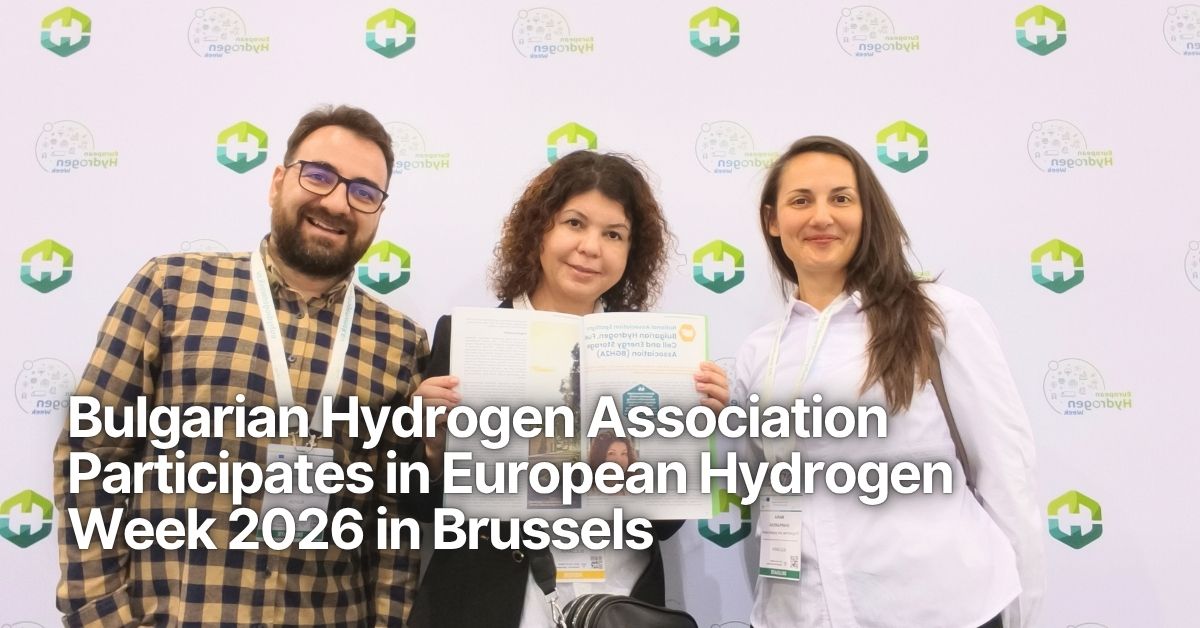
Dennitsa Nozharova (centre) of BGH2A in the pages of The Hydrogen Europe Quarterly magazine
RED III and the Future RED IV: Where Is European Hydrogen Policy Heading?
One of the most important topics for the development of Europe’s hydrogen sector was the implementation of the Renewable Energy Directive (RED III) and the next revision of the legislative framework currently under discussion, known as RED IV.
During a dedicated session on 27 October, “How Is RED III Driving Hydrogen Demand in Europe?”, representatives of European industry, national institutions and hydrogen organisations examined progress in implementing the directive and the barriers to establishing a sustainable market for renewable hydrogen.
RED III introduces specific requirements for the use of renewable fuels of non-biological origin (RFNBOs), including renewable hydrogen and certain fuels produced from it.
In industry, Member States must ensure that RFNBOs account for at least 42% of the relevant hydrogen consumption by 2030 and 60% by 2035, in accordance with the rules and flexibility provisions set out in the directive.
These requirements are important because they establish a regulatory basis for demand for renewable hydrogen, which is a key factor in investment decisions concerning new production capacity, infrastructure and industrial applications.
Nevertheless, the varying pace of RED III implementation across Member States, high production costs and uncertainty surrounding future demand continue to hinder the development of hydrogen projects.
What Could Change After 2030?
The European hydrogen sector is paying particular attention to the new renewable energy framework being prepared for the period after 2030, informally referred to as RED IV.
A preliminary, unofficial version of a European Commission impact assessment published in September sparked considerable debate. Among the options under consideration is replacing some of the binding national RFNBO targets after 2030 with more flexible mechanisms and indicative targets at European level.
This raises an important question for the industry: how can sufficient regulatory predictability be ensured for investments that require substantial funding and long-term contracts for hydrogen supply and offtake?
In October, Hydrogen Europe reported that 270 organisations had already endorsed a joint letter to the European Commission calling for binding renewable hydrogen requirements to be maintained.
RED IV has not yet been adopted as a directive. The European Commission is preparing a legislative proposal for the post-2030 framework, with its final content still to be determined through the European legislative process.
For Bulgaria, this debate is particularly significant. Future European requirements will influence the conditions for developing domestic renewable hydrogen production, its industrial consumption and opportunities to attract investment.

Hydrogen as Part of the Energy Infrastructure of Future Data Centres
Another topic that attracted the interest of BGH2A was the use of hydrogen technologies to provide reliable electricity supply for data centres.
On 28 October, a dedicated session at the B2B Forum, “Hydrogen as a Backup Power Source for Europe’s Digital Infrastructure”, explored opportunities to integrate hydrogen energy systems into this rapidly developing sector.
The expansion of digital services, cloud technologies and artificial intelligence is increasing the need for computing infrastructure. For data centres, this means not only substantial electricity consumption but also exceptionally demanding requirements for uninterrupted power supply.
In this context, hydrogen has several potential applications.
One option is to use hydrogen fuel cells to provide backup power in the event of a failure of the primary electricity supply. In this application, fuel cells convert the chemical energy of hydrogen directly into electrical energy through an electrochemical process.
Another possibility is to integrate hydrogen systems with batteries, renewable energy sources and energy management systems. Such solutions can provide additional flexibility and resilience under certain conditions.
Hydrogen is also being considered as a potential solution for longer-duration backup power, particularly when the amount of energy required and the necessary period of autonomous operation make battery-only solutions difficult to implement.
However, practical deployment depends on several factors, including the availability of hydrogen from suitable sources, delivery and storage infrastructure, costs, safety, efficiency and reliability requirements.
Hydrogen technologies are not a universal replacement for existing electricity supply solutions, but rather an option for complementing them under specific technical and economic conditions.
Industrial Competitiveness, Energy Security and New Applications
The European Hydrogen Week programme also covered other issues directly related to the development of the hydrogen economy.
These included the integration of hydrogen production, storage and transport into the European energy system, opportunities for its use in energy-intensive industries, the development of international supply chains, and the policies needed to support European manufacturers of hydrogen technologies.
A dedicated forum under the H2GLASS project explored opportunities for jointly developing solutions to integrate hydrogen into energy-intensive industrial processes.
High-level policy discussions also focused on the competitiveness of European industry after 2030, while sessions on energy security examined the role of hydrogen storage and integration between different energy infrastructures.
The overarching question connecting these topics is how European hydrogen technologies can move beyond demonstration projects and limited applications towards sustainable industrial use.
BGH2A Participates in a Meeting of European Hydrogen Associations
An important part of BGH2A’s participation in European Hydrogen Week 2026 in Brussels was the National Associations meeting, which brought together representatives of hydrogen associations from across Europe to exchange insights, discuss shared challenges and strengthen cooperation.
The meeting provided an opportunity to examine developments in national hydrogen markets at a time when the European regulatory framework continues to evolve and countries are progressing at different stages towards the deployment of hydrogen technologies.
During the meeting, BGH2A presented its activities and contributions to European hydrogen initiatives, highlighting the importance of moving from project planning to practical implementation.
A key focus of the presentation was HySEE, a project supported by the European Climate Initiative (EUKI), which assesses hydrogen production potential, demand and infrastructure needs in Bulgaria and Romania. One of its activities is the development of an interactive Hydrogen Atlas. BGH2A outlined its role in collecting data for Bulgaria, developing policy recommendations and engaging with businesses and public authorities through consultations.
The association also presented H2START and PermittHy, highlighting how strengthening research capacity, analysing regional hydrogen markets and improving practical support for permitting processes can contribute to the deployment of hydrogen technologies in Bulgaria and the wider region.
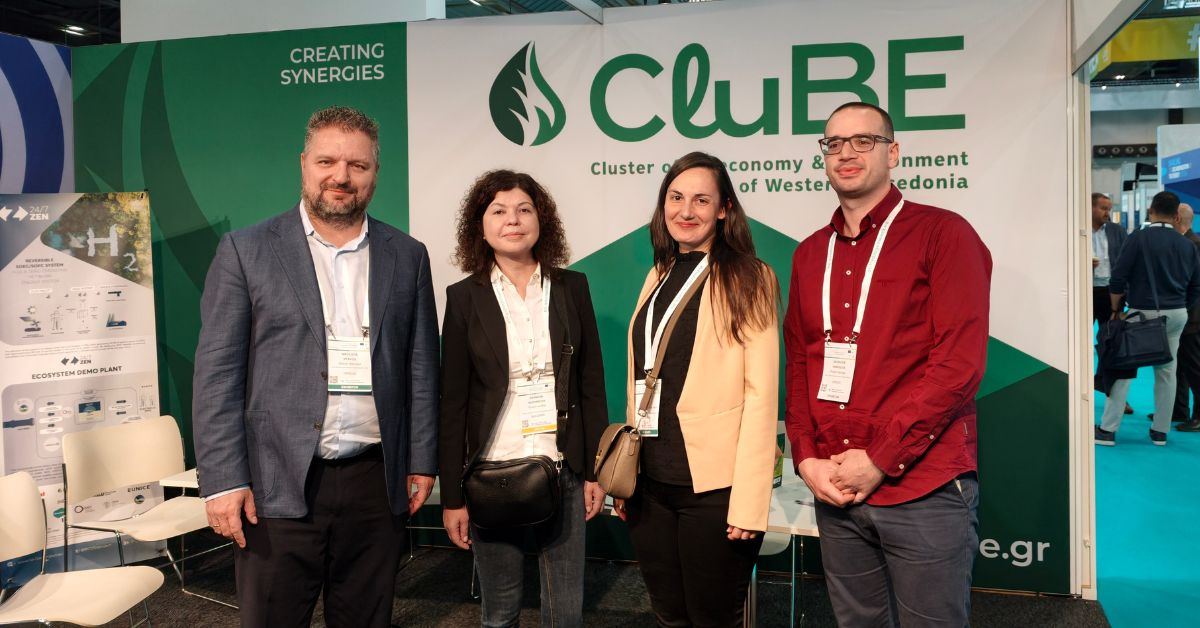
Meeting between BGH2A and the Greek organisation CluBE (Cluster of Bioeconomy and Environment of Western Macedonia)
The meeting also provided an opportunity to build on BGH2A’s existing international partnerships. The association has already signed memoranda of understanding with several European hydrogen associations, strengthening its connections within the European hydrogen community.
These partnerships help raise Bulgaria’s profile in the European hydrogen sector and create further opportunities for international cooperation, participation in joint projects and the development of hydrogen technologies.
Meetings with Partners and Discussions on the Next Steps of the PermittHy Project
European Hydrogen Week also provided an opportunity for working meetings with BGH2A’s existing partners, including organisations from the consortium of the European PermittHy project.
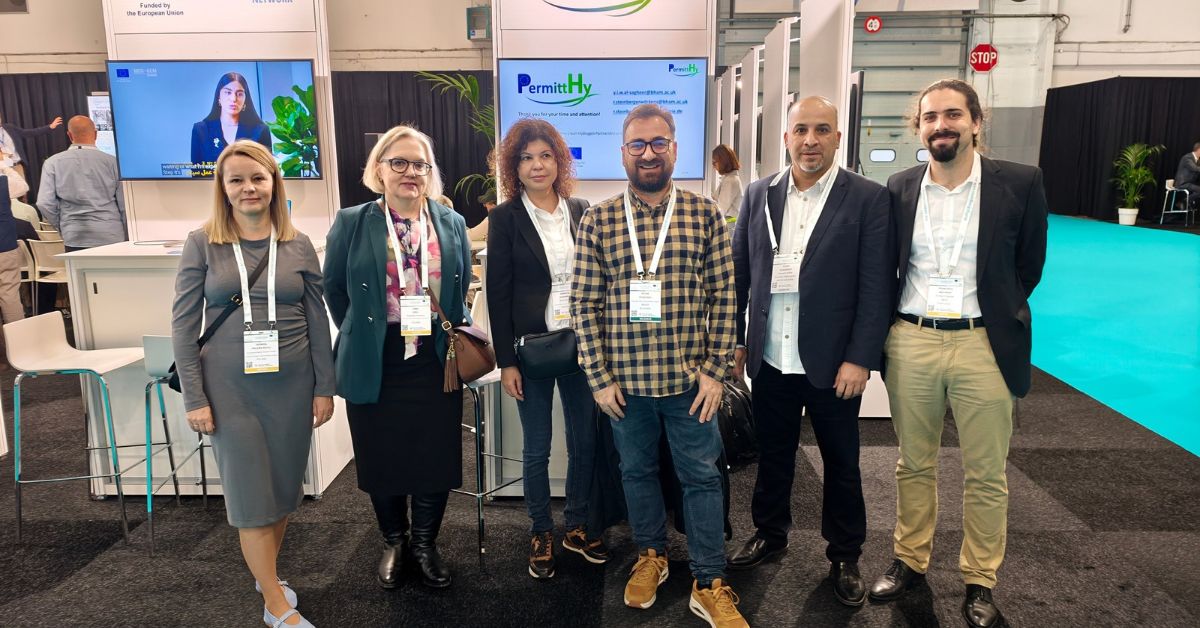 Members of the PermittHy project team at the project’s stand during European Hydrogen Week 2026
During these meetings, the partners discussed the next steps in their joint work on the project and the coordination of upcoming activities.
PermittHy addresses one of the significant administrative and technical challenges facing the development of hydrogen technologies: the need for better-trained professionals and clear procedures for assessing and permitting hydrogen projects.
The project envisages the development of practical guidelines, training materials and specialised training courses for representatives of competent authorities, engineers and other professionals involved in permitting and safety assessment processes.
The working meetings in Brussels provided a valuable opportunity for direct exchanges between partners and for continuing their joint efforts to implement the project.
At the same time, BGH2A representatives also met with other partner organisations to discuss opportunities for future cooperation in hydrogen technologies and European initiatives.
European Decisions and Opportunities for Bulgaria
The participation of BGH2A in European Hydrogen Week 2026 reaffirms the importance of active exchanges between the European and national hydrogen communities.
For Bulgaria, establishing a predictable regulatory environment, developing genuine demand for renewable hydrogen, attracting investment and training the necessary specialists remain particularly important priorities.
Alongside established applications in industry and transport, emerging areas such as backup power supply for data centres demonstrate that opportunities for integrating hydrogen technologies continue to expand.
The Bulgarian Hydrogen, Fuel Cell and Energy Storage Association will continue working to connect European policies, technological developments and international partnerships with the specific needs and opportunities of the Bulgarian economy.
Further Information and Sources: