BGH2A Regulatory Insights
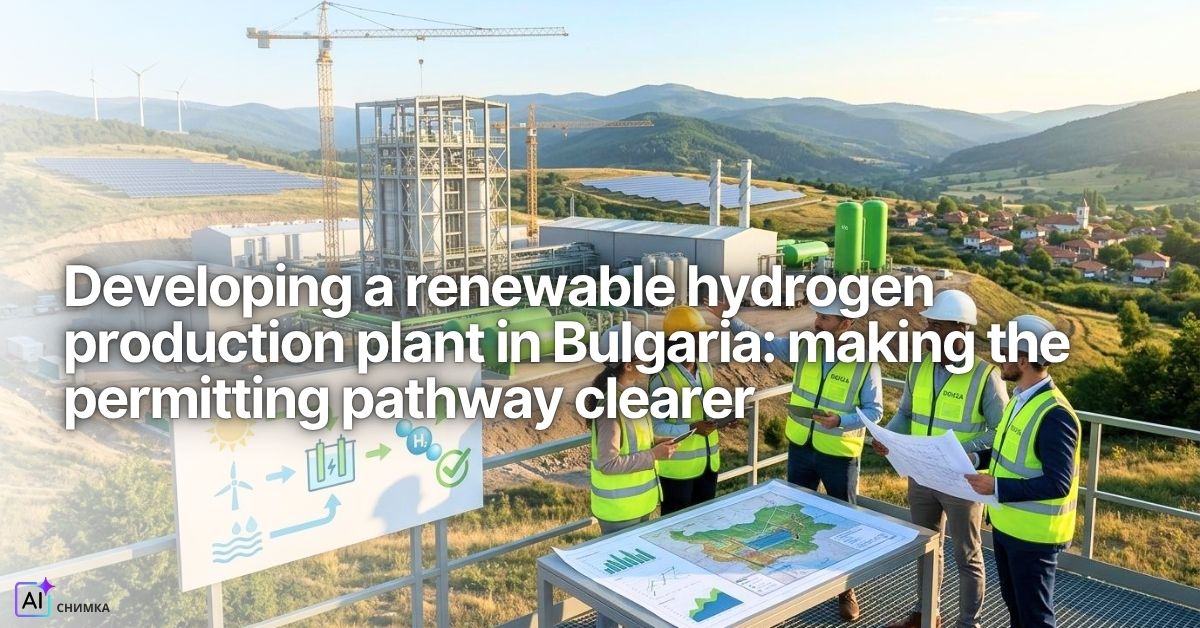
Developing a renewable hydrogen production plant requires more than choosing an electrolyser and securing electricity. Investors must also establish which approvals apply to the site, how the installation will connect to existing infrastructure, and which authorities need to be involved. Clear guidance on these steps can help projects move from initial planning to construction.
What does the permitting process involve?
The Bulgarian legal review prepared in June 20251 concluded that hydrogen production installations can be developed under the general planning and construction framework. It examined several main areas of approval:
- Site and construction: confirming the suitability of the land, completing any necessary spatial planning procedures, obtaining approval of investment designs and securing a construction permit.
- Environmental requirements: establishing the applicable environmental assessment and permitting procedures, taking account of the installation’s capacity, location and associated activities.
- Electricity and water supply: determining the required electricity connection arrangements and securing water supply, including abstraction permissions where applicable.
- Safety and commissioning: demonstrating compliance with applicable construction, fire and equipment safety requirements and completing the relevant commissioning procedure.
These requirements should be considered together. For example, a project combining an electrolyser, renewable electricity generation and hydrogen storage needs to account for the associated facilities when planning its approvals.
Where is greater clarity needed?
The 2025 review identified a need for clearer guidance on environmental classification, electricity connection arrangements and the application of safety requirements to electrolysis installations. It also recommended better administrative assistance for developers.
Environmental screening illustrates why this matters. Screening determines whether a full environmental impact assessment is required for projects falling within the relevant legal categories. Developers should establish the applicable procedure with the competent environmental authority early, rather than assume that every electrolyser requires a full assessment or that none does.
Guidance must also reflect subsequent legal changes. Bulgaria amended its electricity connection rules in 2026, including provisions concerning equipment added to existing sites. Whether a hydrogen project needs a new connection procedure must therefore be assessed against the current rules and its specific technical configuration.
What would improve the process?
BGH2A recommends a publicly available permitting guide for hydrogen production projects, setting out the responsible authorities, required documents and dependencies between procedures. It should distinguish between standalone plants and electrolysers integrated into existing industrial sites, while explaining how associated storage and renewable generation affect the assessment.
For developers, an effective first step is to prepare a concise project description covering capacity, site, electricity demand, water supply and planned hydrogen storage. Early discussions with the municipality, environmental authority and network operator can then establish the applicable pathway.
Clearer procedures and consistent administrative guidance would improve investment predictability while maintaining environmental and safety standards.